Blog: How to keep your pet safe and easy to find this Halloween
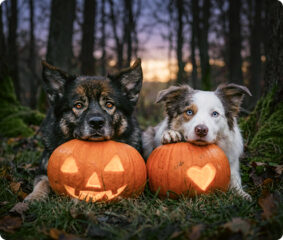
A few small steps now can save you a scary night later
Halloween is full of treats and fun for people, but it’s a genuinely riskier night for pets. It’s the second most common holiday for pets to go missing, right after the Fourth of July, and Pet Poison Helpline sees emergency calls jump by around 12% during Halloween week — making it their busiest time of year. None of that needs to be scary to plan for. Here’s what’s worth doing now, and what to change on the night itself.
Check (or register) that chip
If your pet is already microchipped, log in to PetLink and make sure your contact details
and address are current. It’s the single most important thing for a fast reunion if your pet does get out.
If your pet has a chip but it isn’t registered anywhere, you can register any brand of microchip with PetLink. It’s a one-time fee for lifetime protection — if your pet is found and scanned by a shelter, vet or animal control, your details come straight back up.
If your pet isn’t chipped at all, ask your vet to do it at their next visit, or book it in before Halloween if you can.
Keep the candy out of paws’ reach
Chocolate — especially dark or baking chocolate — contains theobromine, which is toxic to both cats and dogs. Sugar-free candy and gum are just as risky: many contain xylitol, which can cause a dangerous drop in blood sugar in dogs. Store the bowl somewhere your pet genuinely can’t get to, not just somewhere they usually don’t bother with.
If your pet does get into the candy, call your vet or the Pet Poison Helpline right away: 1-855-764-7661.
Watch the decorations
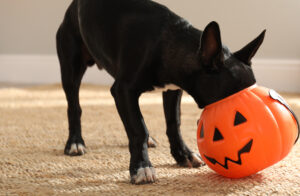
Fake cobwebs, small dangling parts and anything with a string can turn into a choking or entanglement hazard if your pet decides to investigate. Glow sticks aren’t especially toxic, but they taste genuinely awful — pets (cats especially) sometimes puncture them out of curiosity, then drool and race around the house in protest. Keep both out of easy reach.
Rethink candles and pumpkins
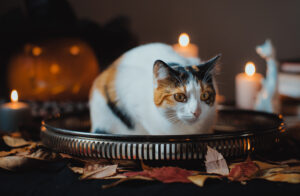
A lit jack-o’-lantern looks great, but a curious nose or a wagging tail can knock it over fast
— and curious kittens can singe themselves getting too close to the flame. A battery-powered flameless candle gives you the same glow without the fire risk.
Give a nervous pet a quiet space
Constant knocking, the doorbell, and a parade of costumed strangers is a lot for most pets.
A quiet room away from the front door — with familiar bedding, water, and something to muffle the noise like a TV or radio — gives an anxious dog or cat somewhere to ride it out.
Cats in particular do best kept inside for the whole day, not just once it gets dark. Even normally confident cats can bolt at an unfamiliar noise or an open door.
Costumes: only if they love it
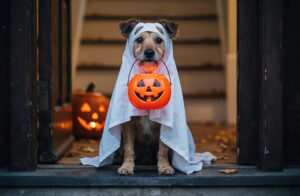
Plenty of pets enjoy dressing up, and plenty don’t — it’s worth finding out well before the day. Do a trial run in advance rather than the first time on Halloween night itself, and check the costume doesn’t restrict your pet’s vision, hearing, breathing or movement, and has no small parts they could chew off. If your pet is pulling at it, freezing, or trying to hide, take it off and let them go as themselves. A festive bandana or collar is a lower-stress alternative.
Stay visible after dark
If you’re walking a dog on Halloween night, go earlier in the evening where you can, and steer clear of the busiest streets and loudest houses. A well-fitted leash, secure collar and something reflective make a real difference once the sun’s down — for cats, the safest option is simply to keep them inside for the evening.
Before you go
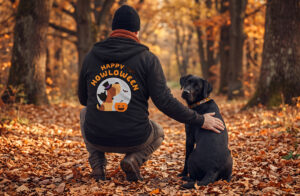
Gear that helps with exactly this — visibility, secure IDs, and a bit of Halloween spirit — is in the PetLink Store, including Halloween-themed collars and collar tags, and Howl-O-Ween and Trick-or-Treat t-shirts and hoodies for dogs and cats.
We hope you and your pet have a safe, happy Halloween.
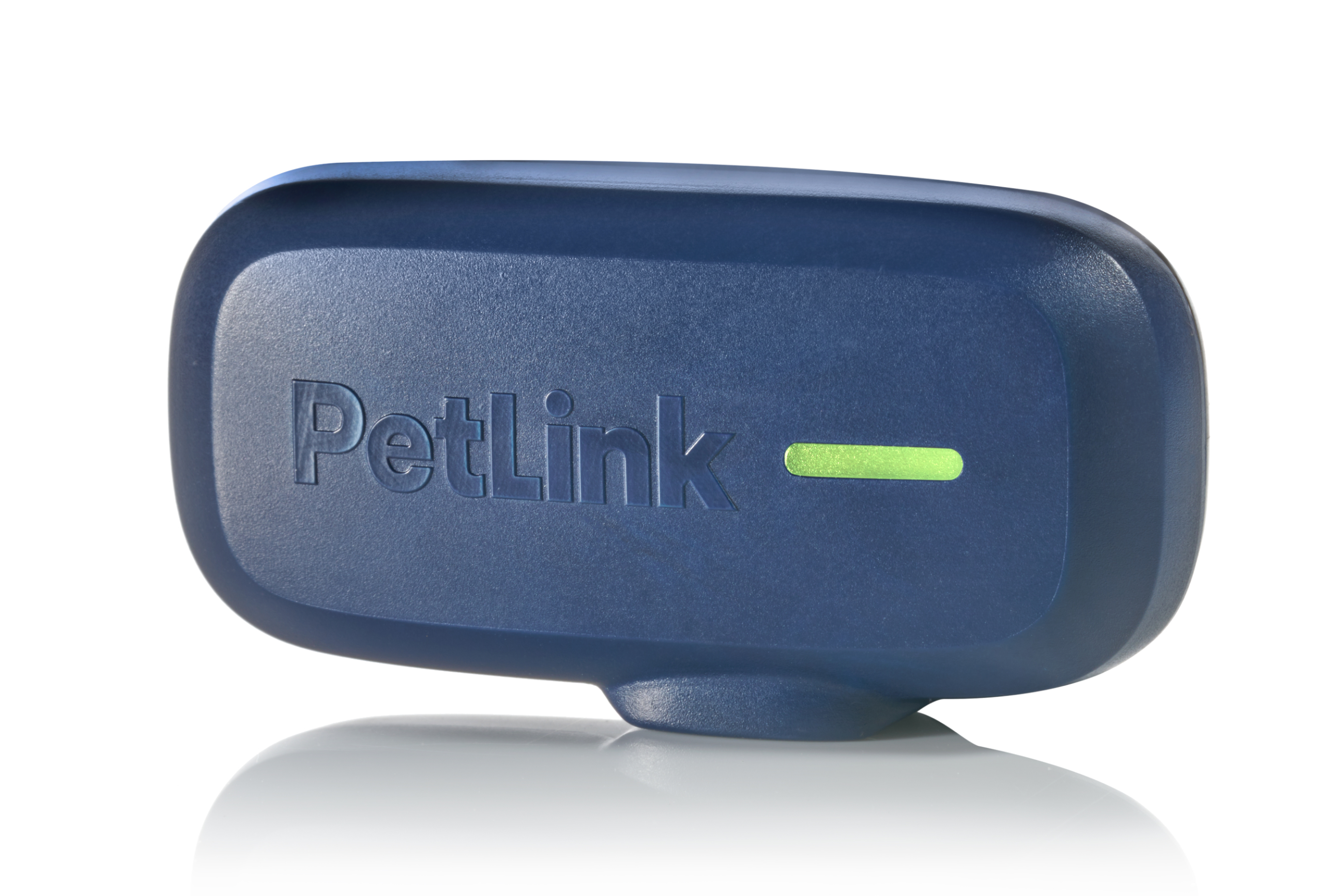
PetLinkGPS Tracker for Dogs
International Women’s Day 2026: Celebrating Women in Animal Health and Welfare
Did you know that women make up more than 85% of the animal health and welfare industry? Behind the pet... Read more

How to keep your pet safe and easy to find this Halloween
A few small steps now can save you a scary night later Halloween is full of treats and fun for... Read more
PetLinkGPS Tracker for Dogs
How to keep your pet safe and easy to find this Halloween
A few small steps now can save you a scary night later Halloween is full of treats and fun for... Read more
International Women’s Day 2026: Celebrating Women in Animal Health and Welfare
Did you know that women make up more than 85% of the animal health and welfare industry? Behind the pet... Read more