Blog: Microchip and GPS: You know the difference, some pet owners don’t!

This blog is intended for veterinary professionals and animal shelter teams.
Every week, a pet owner sits across from you, believing their microchip can track their animal.
This misconception puts pets at risk.
As an animal professional, you’re in the best possible position to educate pet owners on this matter. Here’s a clear breakdown of what each technology actually does, why they’re different and why recommending both could be one of the most valuable conversations you have with every client you see.
The microchip: permanent ID for life
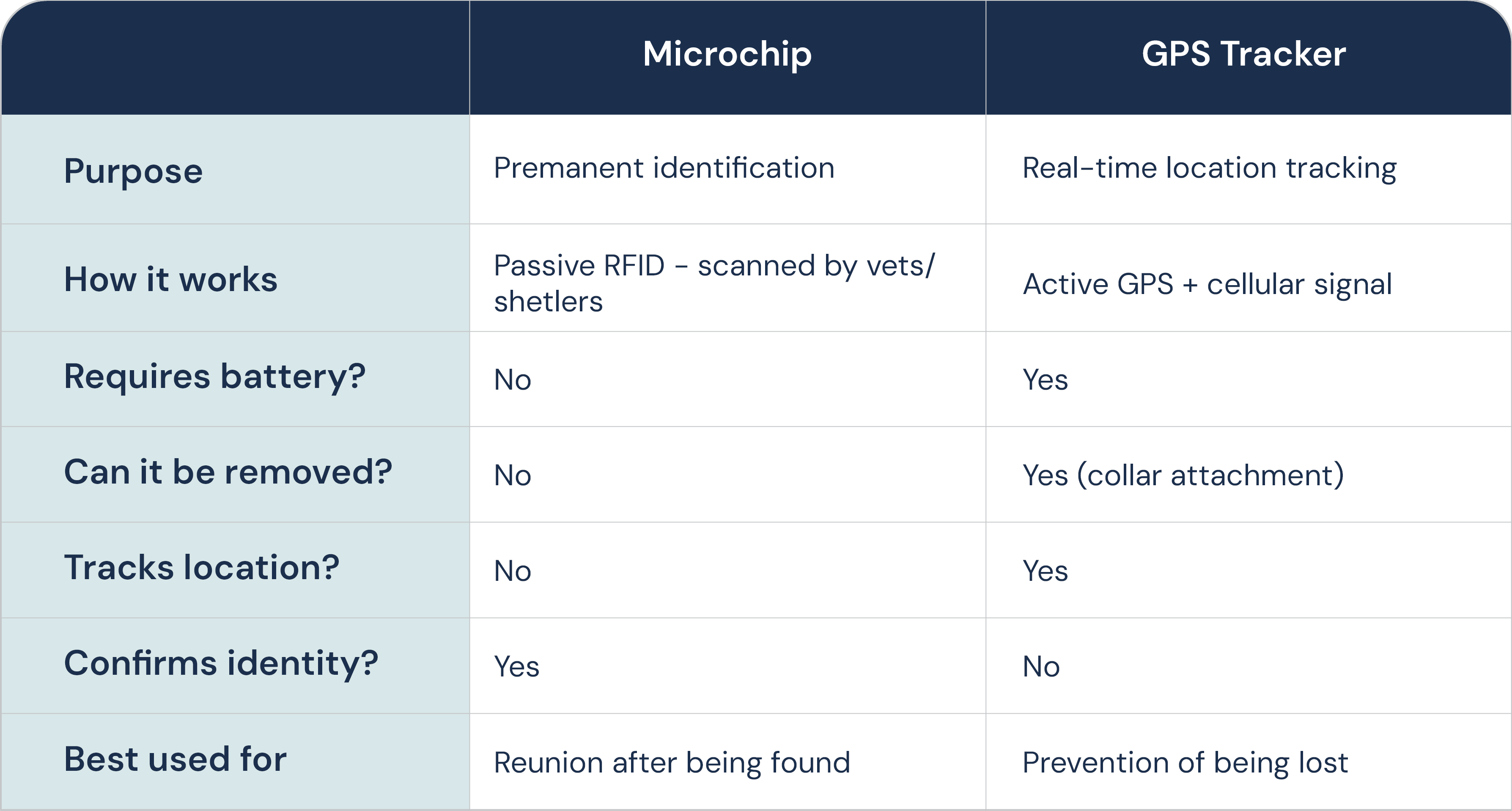
A microchip is a passive RFID device, roughly the size of a grain of rice, that is implanted under a pet’s skin. No battery. No signal. No tracking.
What it carries is a unique ID number. When a found pet is brought to any vet or shelter and scanned, that number connects to the owner’s contact details held in a microchip database. If the microchip has been properly registered and the contact details are current, the pet goes home.
Microchips are permanent and there is no battery required. It’s the most reliable form of pet identification in the world. The only catch: because it is a passive device, it can only be used at its full capacity if the pet is already lost and scanned by a microchip scanner.
What a microchip cannot do: Track your pet in real time, record location, alert you if they leave certain areas or record health data.

The GPS tracker: control before loss happens
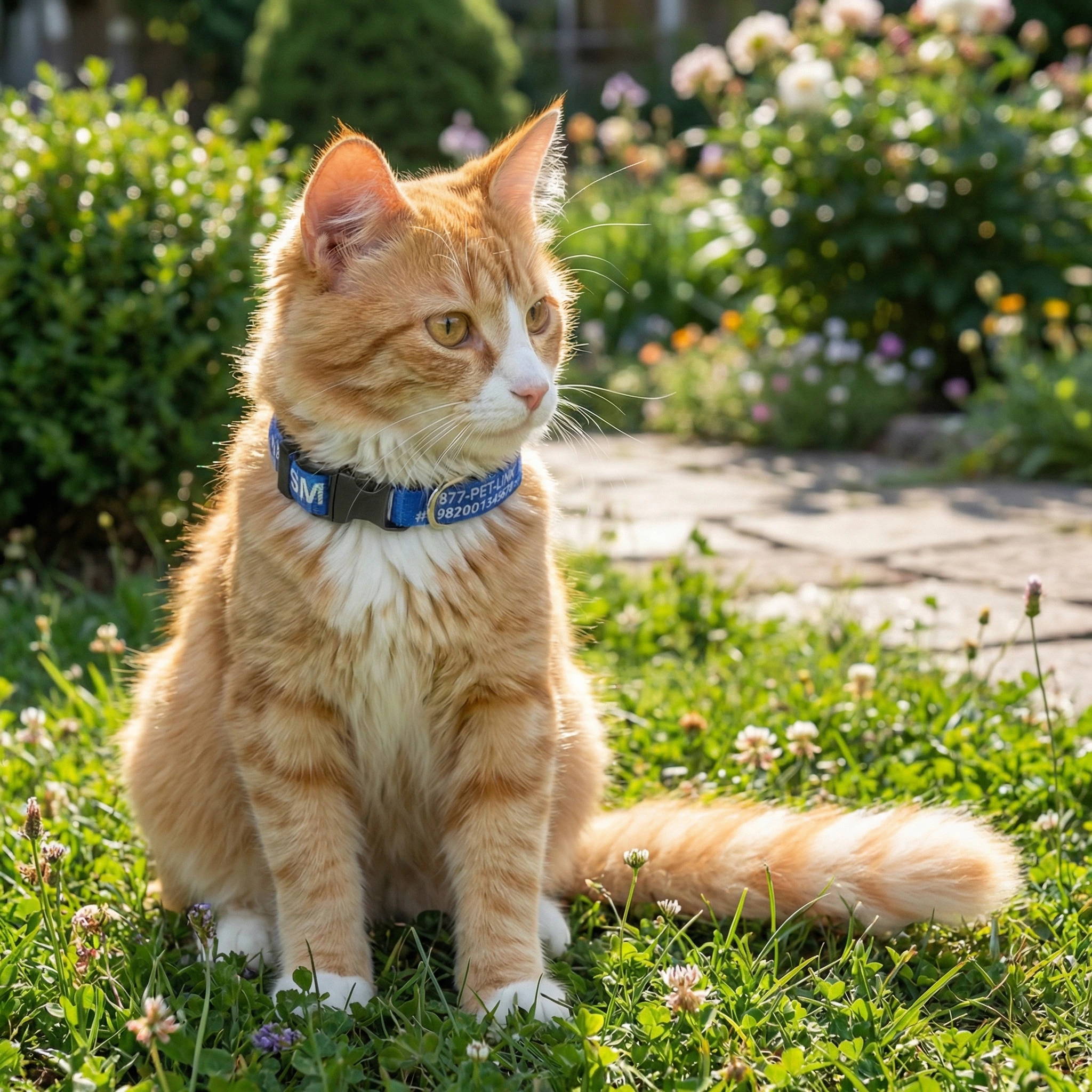
Unlike the microchip, a GPS is active. Worn on a pet’s collar, it communicates with GPS satellites and a cellular network to report the pet’s real-time location to an app on the owner’s phone.
It puts the owner in control before their pet goes missing. With live tracking and Geofence alerts, the moment a pet wanders a pet owner will be aware. Many pets with GPS trackers never reach a vet or shelter at all; their owners find them before it gets that far.
A GPS tracker requires a GPS subscription plan to work, plus it has a battery that needs regular charging.
What a GPS tracker cannot do: act as a permanent ID, it can be removed from a collar.

Why both? Because they do completely different jobs.
Most pet owners think of microchipping and GPS tracking as alternatives. One does not replace the other, but instead solve two completely different issues. Recommending one by itself can leave a gap in your pet’s safety and identification.
Microchips help reunification, while GPS Trackers show you their location.
A microchip relies on a chain of events going right: the pet being found, brought to your facility or clinic, scanned before reunited. A GPS tracker puts the owner in control to locate their pet before they go missing. However, a GPS Tracker alone can run out of battery or be removed.
Together, there’s no gap. One internal, one external. One identifies, one locates.
The registration issue nobody talks about enough
A microchip that isn’t registered, or that has outdated contact details on file, is all but useless.
Every day found pets arrive at vets and shelters with a chip that scans perfectly but leads nowhere. The registration was never completed, or contact information was not updated, and a reunion that should have happened in minutes may not happen at all.
The chip is the lock. Registration is the key.
Registration is the most important action a pet owner must take after microchip implantation, and it’s the one they need to be reminded of most.
A single question at any appointment is all it takes: “Is your microchip registration still up to date?”
That question, asked regularly, could be the reason a pet gets home.

The role of animal professionals
You’re the most trusted voice your clients have. A brief explanation at the right moment (during a routine check-up or post-neuter/spay) can change how a pet owner thinks about their animal’s safety for life.
For vets: every microchipping appointment is a natural opportunity to explain what the chip does and doesn’t do. Recommending GPS tracking as the active layer reinforces that you’re giving complete safety advice, not just completing a procedure.
For shelters: the point of adoption is one of the most important moments in a pet’s life — and the moment they’re most at risk of getting lost. Recommending both at the point of adoption takes two minutes. The protection it provides could save a pet’s life.
Summary
Microchip + GPS. Together they make pets safer.
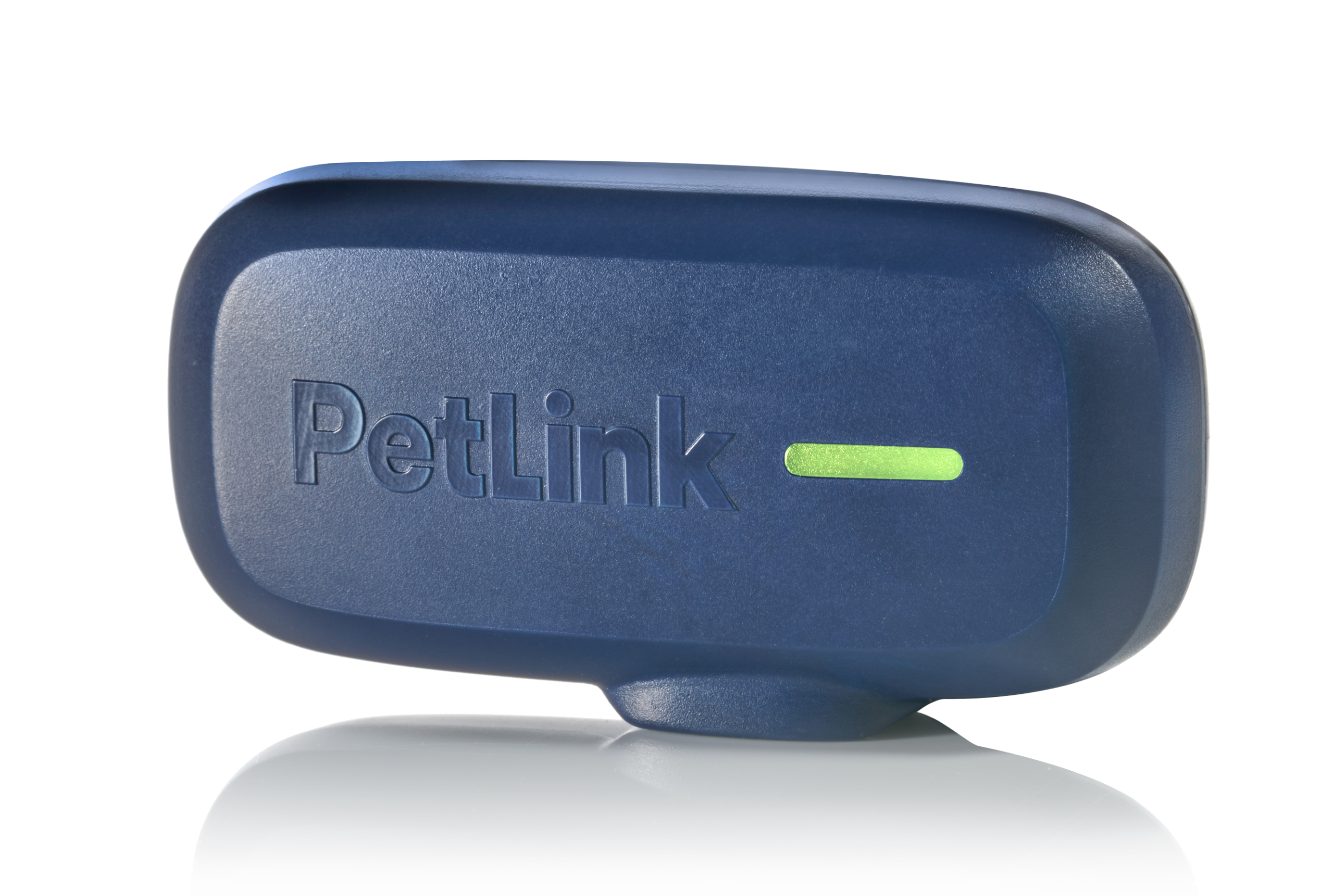
PetLinkGPS Tracker for Dogs
Five training tips for the new dog parent from @adogslifewithlia
You finally did it! You’ve made the move and got your dream dog. Maybe it is a pup that you... Read more
Microchip and GPS: You know the difference, some pet owners don’t!
This blog is intended for veterinary professionals and animal shelter teams. Every week, a pet owner sits across from you,... Read more
What is Microchipping? Your Pet’s Permanent ID for Life
Your pet means the world to you. A microchip is one of the simplest, most reliable ways to make sure... Read more
PetLinkGPS Tracker for Dogs
Microchip and GPS: You know the difference, some pet owners don’t!
This blog is intended for veterinary professionals and animal shelter teams. Every week, a pet owner sits across from you,... Read more
Five training tips for the new dog parent from @adogslifewithlia
You finally did it! You’ve made the move and got your dream dog. Maybe it is a pup that you... Read more
What is Microchipping? Your Pet’s Permanent ID for Life
Your pet means the world to you. A microchip is one of the simplest, most reliable ways to make sure... Read more